For an all work and no play culture, the Japanese make exceptions to let loose in December and January. That’s when bonenkai (忘年会) and shinnenkai (新年会) parties give co-workers and friends reason to forget the old and celebrate the new.
January 14th’s shinnenkai was with Kensuke (last seen on the blog saving my life) and some of his buddies (last seen barbecuing in the park – click on the “Kensuke” label link at right for a refresher). I anticipated an evening of struggling to speak in Japanese and relying heavily on hand gestures oiled by sake, shouchu, and draft beer.
Kensuke and friends seemed subdued, maybe because everyone was off to a shaky start. Kensuke was set to lose February’s income because Master was closing the izakaya and taking a month’s rest – in Hawaii. Working Mondays at a pachinko parlor wouldn’t make ends meet.
Tak, fighting a cold, looked depressed underneath his wool hat. He didn’t even have part-time prospects after his long hair got him bounced from an interview at another pachinko parlor.
After talking about jobs, or the lack thereof, conversation switched to girlfriends, or the lack thereof. Kensuke and Tomo recounted their foray into Kabukicho, Tokyo’s red light district. After 10 minutes of perusing photos, about $125 got them 15 minutes with the Japanese girl of their choice. Except that when the door opened, in walked a Korean, they said with a trace of buyer’s remorse.
The affable grill master from the summer BBQ was noticeably absent, but checked in a few times via cell phone from home where he was studying for a college exam. Such obligations, however, didn’t stop Tomo from extending Sunday’s shinnenkai until 2:30 a.m. Monday. The slim tae kwon do fighter (below) tied a ponytail on top of his head and cursed off a Chinese test looming later that day.
“Not pass,” he said, gritting his teeth. I didn’t disagree, as his Chinese vocabulary was about the same size as mine – four words.  Around the table, lighters sat perched on cigarette packs like poker chips. Kazu blew rings from his mouth. Ailing Tak dragged on a cigarette and blew mucus into a wet wipe. The table began to clutter with empty glasses, discarded edamame pods, and bare plates as fried chicken, raw octopus, and other shareable snacks were attacked upon arrival. I dipped slender shishamo (ししゃも, smelt fish) into mayo and savored its scaly texture. The Japanese have caught on: mayo makes everything taste better.
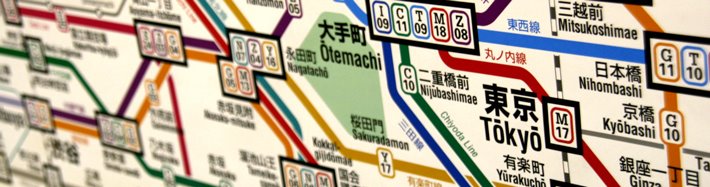
Quiet Kazu was wearing a long sleeve shirt imprinted with a map of New York City’s subway. I pointed to the dot on his chest where I was born. A barrage of “New York life” questions followed, which were mostly contorted fantasies picked up from watching too many B-movies.
The guys were most interested in black people and junkies; needle in forearm gestures accompanied their questions about the latter. How many black friends did I have? How did I greet them on the street? Were cops not strict about marijuana? Did I use in high school? Did all junkies use wheelchairs? Did the one junkie per block ratio hold true in the City? So as not to completely disappoint them, I pointed to Kazu’s shoulders and said that in those outlying areas you could find what you were looking for.
I might have misinterpreted, but Kensuke then shared a factoid that for every 100 meters between a NYC police station and his hotel, there was a 150% chance that a Japanese person would get mugged twice.
We later moved into a private booth equipped with a karaoke machine. Earlier, sniffling Tak had been eager to know if I could rap. Something about wanting me to do so at his band’s show. In denial that I couldn’t, he queued “Lose Yourself.” I reluctantly picked up the mic, and by the time I put it back down I had new respect for Eminem’s speed. Hopefully I convinced Tak to keep searching for a performer.
We took turns thumbing through a song book the size of a state telephone directory. I knew just where to flip. With sporadic practice over the months, I’ve assembled a repertoire:
Bon Jovi – Livin’ on a Prayer
Zager and Evans – In the Year 2525
America – Horse With No Name
Javine – Surrender
Linkin Park – Numb
Celine Dion – My Heart Will Go On
It’s a nice mix of oldies, rock, and pop that won’t push my limited vocal range. Celine is a shattering exception, but by that point nobody will remember anything anyway.
Despite my spirited first-time rendition of Mr. Mister’s “Kyrie,” quiet Kazu turned out to be the most talented. While the others stuck with Japanese hits, he handled the Red Hot Chili Peppers on key and in clear English.
Aside from memorized lyrics, however, their collective English ability was quite limited. The five of us nevertheless connected. Cell phone dictionaries bridged gaps, such as for gesture-defying words like entrance examination, conscription, and sperm bank.
Although they kept complimenting my Japanese, it hadn’t improved since the BBQ six months ago. I still only know about 10 verbs, half of which I can use correctly. Instead, I spit out a steady diet of nouns and hope people get the picture. Kensuke made an interesting point. Despite not studying, my living in Japan for less than two years has made me more proficient than their six years of compulsory English education. Kensuke (center) and Tomo
By 10:30 p.m. Kazu and Tak called it a night, but Kensuke, Tomo, and I moved on to a yakitori place that could become my next neighborhood hang out. Staff welcomed me like a regular, and I pulled up a padded beer barrel stool among the lively locals growing louder after every glass. Kensuke kept the sake flowing and ordered skewers of torikawa (とりかわ, grilled chicken skin), tiny bird eggs, liver, and pork slices.
Around 1:30 a.m. a female friend from their junior high days joined us for a final round of sake and skewered entrails. We then parted ways into the chilly January night, 2007 having been initiated Japanese style.
Tuesday, January 16, 2007
Drinking in the New Year

Thursday, September 28, 2006
Sayonara to Summer
In half an hour? The Japanese aren’t known for their spontaneity, but here Kensuke was inviting me to a BBQ two days after he saved my life. It was the last day of summer before I returned to work. Soon I would only be able to feel the sunshine from the wrong side of classroom windows.
The night we met at DJ’s place, Kensuke mentioned his favorite park near where we live. I counted the homeless people sleeping on benches in Yotsuya Sannencho Park. No sign of grills. No sign of him either.
Once he arrived at our designated meeting point, he led me away through twisting alleys with quiet homes bathed in soft afternoon light. A park like none I have seen in the capital came into view. A bamboo fence enclosed a gravel lot. In one corner, trees shaded a small shrine. Businessmen and elementary school children stopped by to summon the spirits.
Dark splotches dotted the back of Kensuke’s Bob Marley t-shirt. A towel wrapped around his neck soaked up the last of summer’s sweat. Our feet crunched on pebbles as we approached his four friends sitting around a hibachi. Two sat leaning against the fence sharing earphones like Siamese twins.
The cook rose up from sitting on the cooler to welcome me with a cold Yebisu beer. I recognized the tanned and mustached boy from DJ’s place. The grill sizzled with an assortment of meat, which he piled generously onto my paper plate before I took a “padded” seat on a flattened cardboard box.
This being a city that has repeatedly burned down over its long, fire-prone history, cooking devices were banned in the park. Helicopters chattering above added to the cook’s paranoia, which he voiced in Japanese.
“If the police come, you run,” translated a slim 19-year-old who has the Friday night shift at Kensuke’s restaurant. He pulled back his long auburn hair with a tortoiseshell headband and continued, “You are teacher.”
We all laughed. Water sources close at hand quelled any risk of fire. Near the shrine was a manual water pump, and much of this small sanctuary was filled with a dirty pond home to some resilient goldfish and one fearsome Kappa water monster, or so the boys told me.
This mythical creature lurks in rivers and ponds, and preys upon humans by gently sucking out their entrails through the anus (distended rectums of drowning victims is evidence). Only cucumbers can combat a Kappa’s hunger for humans, so pocket a good supply the next time you take a dip.
The hot plate sizzled with pork, sausages, smelt fish, and veggies. A record player studded with Sapporo bottle caps turned out reggae beats. I held my own as we talked in Japanese about various subjects like music, cars, and girls. They said Japanese Olympic gold medal skater Arakawa had a “horror face.” I charged that American Britney Spears was dumb and ugly. However, we came to agreement that Sharapova was one fine piece of Russian meat.
Aside from the imported Jamaican music, the park, food, company, and conversation felt like the real Japan. Although always an outsider here, for a few hours on the last day of summer I felt incorporated into Japanese life.
It didn’t last long. I suddenly urged to cry out in my native language. Surrounded by the Japanese atmosphere, I wanted to reassert my identity. I grabbed my Yebisu beer can, and thumbed away the beaded sweat. I read the English label aloud like I was at a poetry reading. Even the earphone twins tuned in to listen. Unable to digest my words, they captively swallowed them whole.
“You are so cool,” the cook smiled following my impassioned delivery.
I took a refreshing sip before returning the compliment with an empty plate.
Monday, September 11, 2006
The Night Kensuke Saved My Life
 DJ’s party is always a good place to meet Japanese people. Last month’s theme was “virgin honeymoon,” and featured a mural of a pumpkin-headed woman in a mini-skirt swinging an ax. Illuminated under black lights, it came closer to Halloween than honeymoon.
Unlike past events when I helped pass out flyers on the corner to suspected English-speakers, this party was a closed event. The bar was trying to keep a low profile – from the cops. Apparently they had visited on another night, which was enough to spook DJ & Co. of a follow-up at their monthly event.
Usually I don’t have a connection to the people I meet, but I shared something in common with Kensuke. He lives down the road from me, and works at an izakaya in between our apartments. He invited me for dinner two nights later.
Wisps of a goatee decorated his young face. Soft, wide almond eyes invited friendship. He seemed like the sort of person you could become friends with instantly. He dressed like an apprentice in the restaurant’s t-shirt and a tightly rolled headband that crowned his head like a halo. He accompanied the chef on frequent smoking breaks in the kitchen. In 35 years I could see him in the chef’s grease-stained apron with the frying pan in one hand and a cigarette in the other.
The chef, 59 and grandfatherly, spoke just a few words of English, so we stuck to basic Japanese. Not knowing what to order, I expressed basic preferences, namely that “I like fish and meat.” He took it from there. The boiled and bony mystery fish was disappointing, but five assorted yakitori skewers made up for it.
Kensuke brought me a raw egg to use as a dipping sauce for the meat. Raw eggs are a common and flavorful garnish in Japan. I draw the line at eating raw chicken. Away I dipped, only to have Kensuke correct me that only one of the five skewered meats was meant to be egged.
Three hours of limited Japanese conversation ensued. Kensuke asked if I wanted to finish off my meal with some sake. It went down smoother than water. The chef scolded him upon learning that he had poured from the most expensive bottle. Master wrote it off on the house.
The owner of the restaurant had one more present before I called it a night. Master reminded me of someone who would have attended Woodstock. Concert posters, t-shirts, and autographed photos lined the walls. A long, bony face sat atop a lollipop frame. A rolled-up headband also circled his head, and his lips squeezed a lit cigarette.
From a box of individually wrapped sweets, he presented me with a pastry from Sendai. He had trouble opening the plastic wrapping. At a BBQ the next day, Kensuke would tell me that Master was roaring drunk as per usual, although he hid it well. He sliced through the wrapping with scissors, and put the pastry on a plate in front of me. He turned his attention to a small packet that came wrapped with the pastry.
Master’s fingers obstructed my view, but I was pretty sure it was a dessicant, boldly labeled “DO NOT EAT” in both languages. Master cut it open.
“Excuse me, what is that?” I quivered in Japanese.
“Sauce,” he said, dumping black powder onto my white pastry. I cringed. The powder looked like mold, and had some seasame seeds mixed in. Was he trying to kill me? I hadn’t even paid the bill yet.
Although still very much a foreigner, I now see through Japanese eyes. Master’s pastry put me in a pickle. I thanked him for his generosity, and prepared to save face by stuffing mine. My gut churned at what a sense of cultural dignity moved me to eat. I could stomach the aches. Besides, I was still on summer vacation, and had a free day to burn at the doctor’s or hospital if necessary.
I stalled by nusing the last of my sake. I trusted its guidance. I reasoned turning the pastry over and picking at the untainted side, and conceding fullness before I fully poisoned myself.
My hand hovered above the plate. Just then Kensuke came out of the kitchen. He was holding the crumpled packed Master had thrown away. He politely suggested to his boss that maybe the special sauce wasn’t designed for digestion.
“Hai, hai, hai,” Master chuckled off the minor mistake, slapping me on the back. He staggered to the back of the room to fix me up with a pristine pastry.
I turned to Kensuke and mouthed thanks. The incident shook me up, not because of Master’s mistake, but at how I had nearly convinced myself to nibble around poisoned food to maintain the important Japanese concept of harmony.
Master and chef bid me farewell, encouraging me to return again. Thanks to a life-saver named Kensuke, I intend to do just that.

