 It seems like a long time since I first stepped into a classroom. A year has come and gone, and in its course yielded unanticipated lessons. I’ve chronicled the day-to-day mischief and chaos I’ve witnessed, but after the final bell, what has this teacher learned?
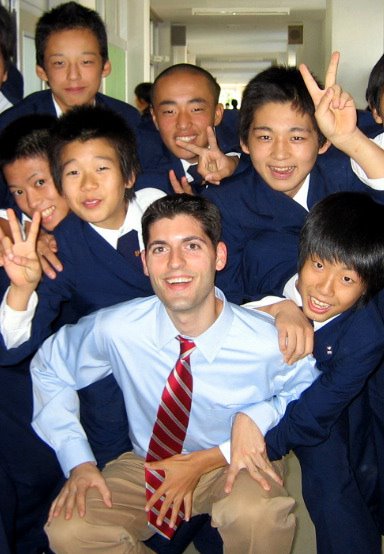
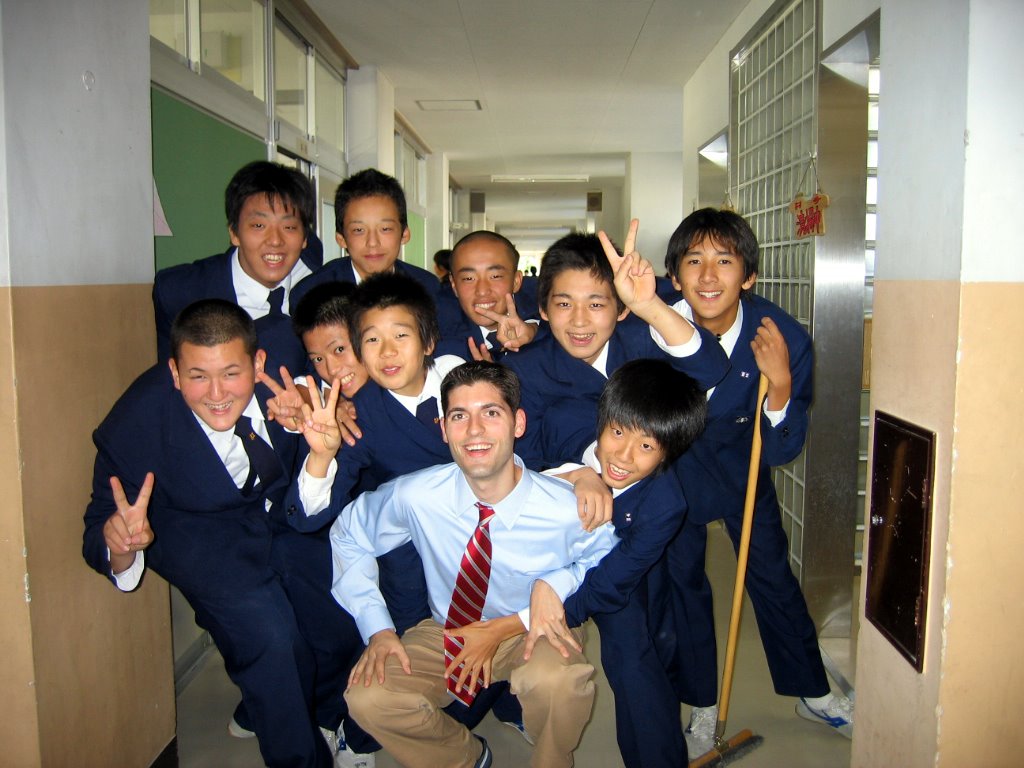
In a world of poverty and politics, natural disasters and nuclear weapons, I’ve come to value innocent students as an outlet for juvenile jokes and mutual companionship. School immersed me in the simplicity of malleable minds free of adult worries and real-world problems. 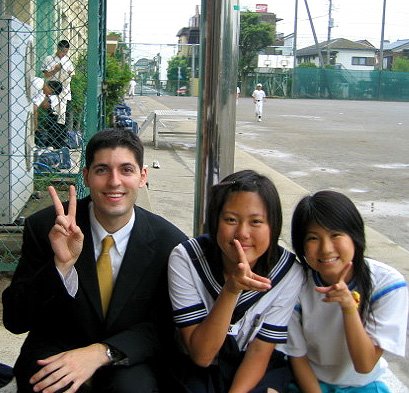 Junior high in Japan was a triumphant return to a time in America that I’ve tried to black out; I never even bought a yearbook then. This job gave me an opportunity to make up for one of those three years of misery. More than 10 years later and on another continent, I finally became one of the cool kids, just disguised as a teacher in Pumas.
Friendship was superficial, but I wasn’t expecting to forge life-long connections with kids half my age. We bonded for the moment, and it was the moment that counted. Our lives intersected fleetingly, but these students touched me (spiritually, but certainly also physically) in ways their American peers could not.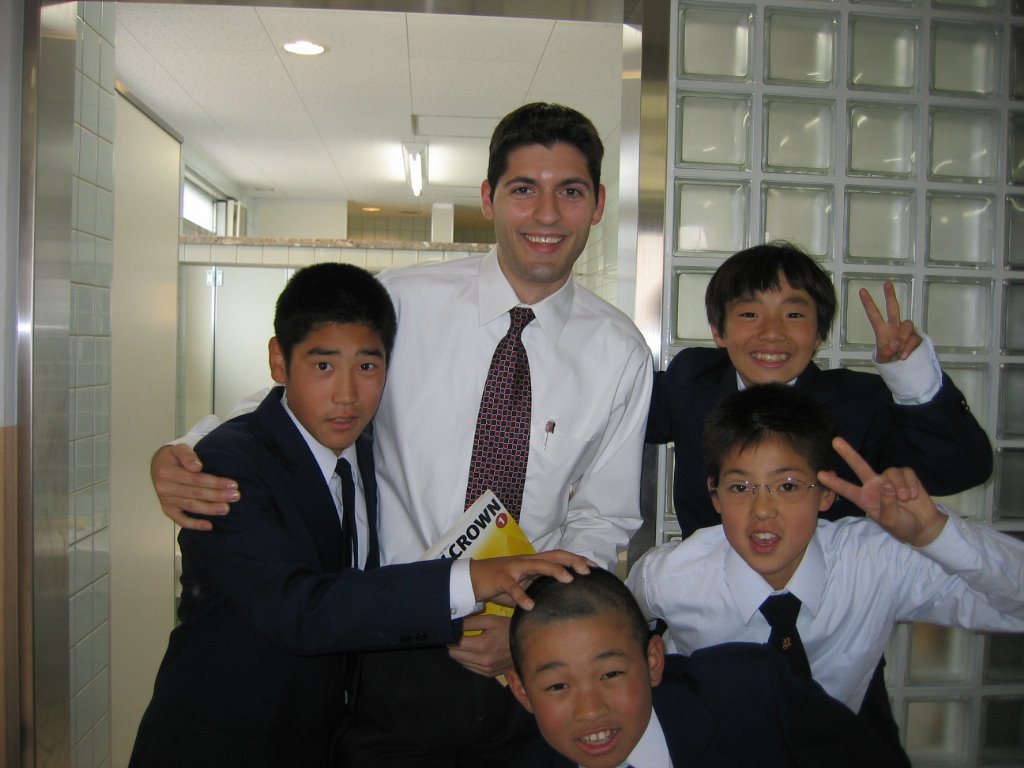 They patched a void of camaraderie in a confusing culture where I maintain shallow roots. Japan – with its traditions, etiquette, food, and language – is arguably the most complex country on earth. To even begin to grasp the intricacy of this society is a challenge that takes months of close observation. Businessmen and tourists don’t stay long enough to gain a sense of true Japan.
I came face-to-face with raw culture in a working class ward not in any guidebook: I participated in daily life at public school. In return, students got up close (and often too personal) with a foreigner otherwise inaccessible at their sheltered age. We symbiotically brightened the boredom of the curriculum through high-fives, immature jokes, and recess sports. The universality of shared company overcame the awkward exchange of languages. When crossing cultures, baby steps in communication feel like a big connection. With wide eyes and curling corners of mouths, they signaled that our company was more than just shared – it was appreciated. Even cherished. I felt like big brother, and wanted to hang out with students after school and pass around bags of dried squid and melon flavored chips while fighting over PlayStation2 controllers.
After growing up, I never thought much about kids, especially not working with them. I became a teacher in Japan because it’s the easiest path to a work permit. I never expected to become attached to those half my age and of a startlingly different ethnicity. They taught me more about life and about myself than I taught them grammar. We grew together, but on different wavelengths.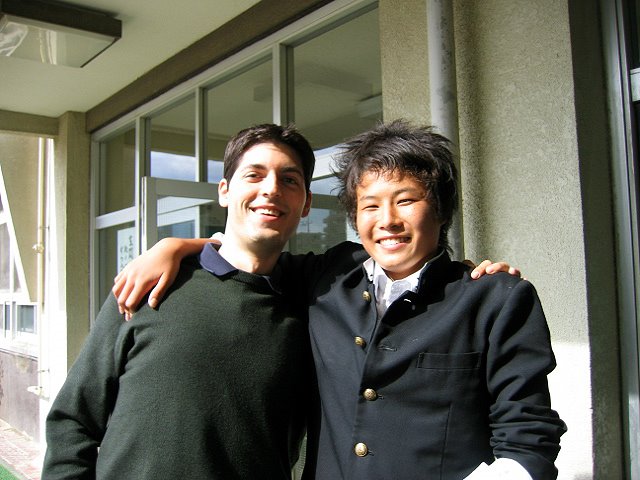 Through teaching I came to understand the power of a personal touch. Few jobs can influence the direction of someone else’s life. Part educator and part entertainer, I planted seeds of English and Americana in spongy minds. I know that more than a few will mature into interpreters, translators, even English teachers. I never realized this power from my days on the receiving side of the lectern.
A Douyoto School girl chose this to say in a composition about “one important thing:”
Though I’m doing bad and good things…varied things, I’m having a good time at school. I think I can enjoy school life by grace of friends. There are disgusting things in my school life. But my friend gives me spirits a lift when I feel down.
The school which has many friends is pleasant place!! I have a dream. One day, all students will go to school.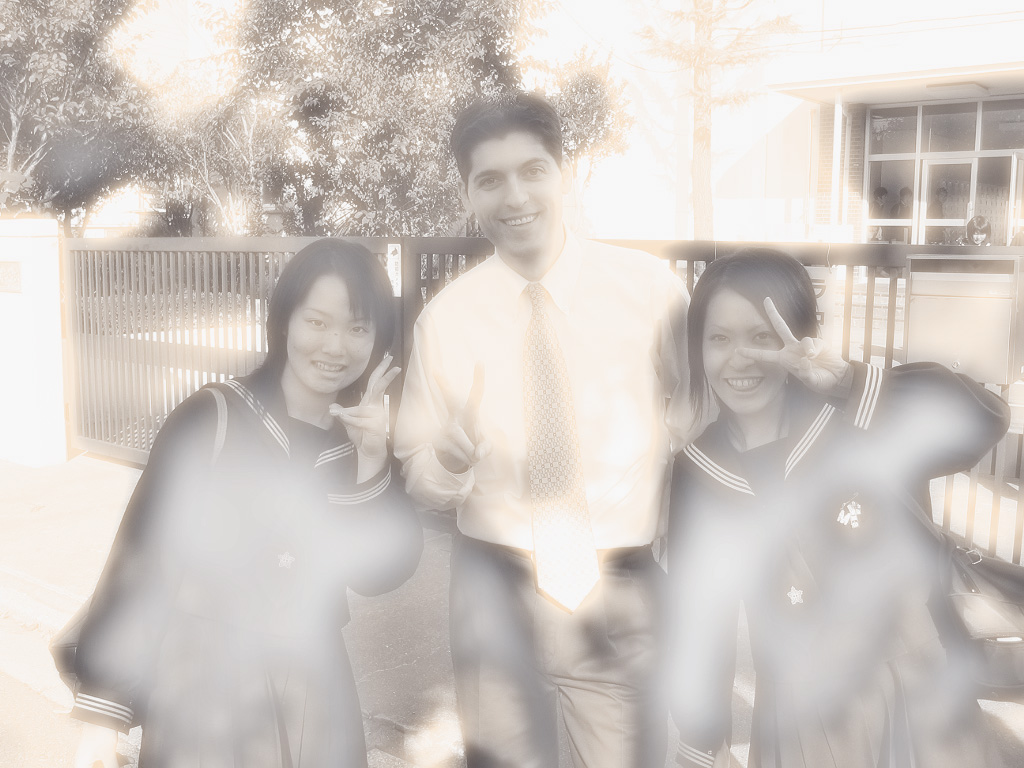 To be a part of these young lives for however brief, the memory – on both sides – will persist. None of them (thank god) are reading this, but if they could, I’d want to look them in the eye and with a slight bow of my head say “thank you.” You were my reason for staying in Japan – hundreds of reasons, in fact. Each one similar but slightly individual.
The end is just the beginning. Stay tuned for a whole new season of students.
The New Batch drama premiers this September.
Monday, July 10, 2006
Reflections

Friday, March 03, 2006
The Toilet Paper Incident
 At Omiyada, there was much ado about one-ply. A mound of unraveled, slightly damp rolls sat on the vice principal’s desk. Had the school lunch of miso soup and mystery fish of the day on rice given him the runs?
Teachers were filing into the room after fifth period. Having survived my final class of 7th graders for the day, I intended to jet off to a job interview; however, before I could zip my bag, talk about toilet paper began.
All eyes were on the principal’s long face and folded arms. Murmurs of agreement rippled through the teachers’ room. Something had to be done, and fast. Iran couldn’t be allowed to enrich uranium. It would destabilize the whole region. Or that’s what you’d think they were deliberating with such somberness.
I understood the following words: toilet paper, window, from the fourth floor and outside. Coupled with Exhibit A, I got the picture. After I left, a school-wide assembly was convened to ferret out the perpetrators. Remember, this was the school where Ms. Shomatsu reacted to a piece of chewing gum on the floor as if she had found a spent fuel rod.
Justice was swift. The following day was my final one at Omiyada, and the morning meeting was the most exciting of all. I was expected to give a brief farewell speech, but three girls stole my thunder. Eyes fixed on the floor, they were paraded in to face the humiliation of the entire teaching staff, including the foreigner sitting front and center.
The usual suspects. These girls were the very same 7th grade terrors that Mr. Nishono had warned me about. From their fiefdom of picture albums and colored markers in the back of the room, class time had nothing to do with learning.
Each girl took the floor to announce her name, grade, class and heartfelt apology. The first could barely choke back tears. She was the one who had taunted Mr. “Mista” Nishono when he tried to yank her out of class. She was singing a different tune now. Her young face shriveled in fear from the hardened stares of every teacher. She apologized with deferential language, and bowed deeply before sulking away with a guilty conscience.
The few times I interrupted the second girl from her creative pursuits to ask a question, she responded in passable beginner’s English. She had potential as a student, but bellied up to bad influence by angling her desk to be within arm’s reach of photos and markers. Glasses and short hair added innocence to her now pained expression. She had to be the one just going along with the plan in the heat of the moment, never expecting it to come down to this.
The last delinquent was the ringleader. She was tall for her age, and her few freckles spoke to me that she masterminded the whole operation. But where, oh where, did she find so much toilet paper? She didn’t have much to say. In Japan, silence is not uncomfortable. It’s reflective. She muttered an apology, and stood there until a teacher showed her the door. I knew she’d be back hell-raising within a week.
This show of force and remorse provided a segue into my farewell speech, which I nervously delivered in Japanese and have translated as follows:
Today is last. That’s disappointing. I had fun. Omiyada students are lively, aren’t they? Seventh graders are cute, but sometimes I have headache [pause for laughter]. Good luck! Thank you and farewell. Today was last indeed. That translated into clearing pencil inventory from my desk drawer. I slapped them into the hands of boys with whom I often discussed baseball over lunch. I collected love letters from two 8th grade girls, and gave pink pencils in return.
 One went to a boy for reading a passage out loud. Touched by the gift, he reciprocated by unfastening a samurai pin from his pencil case. The Japanese character stands for “sincerity” and “faithfulness.”
The lesson halted, and everyone was studying the slightly emotional exchange. His outstretched hand was shaking from being in the spotlight. I graciously accepted, and instinctively fastened it onto my sweater—over my heart for maximum effect.
Swapping pencil for pin was more than tit-for-tat. Although we met only briefly and could barely understand each other, these mementos will persist. They symbolize different cultures that intermingled inside a classroom on the outskirts of Tokyo. Cultures that will continue to influence our very different lives in very different ways.
My last conversation with Omiyada students was in the unheated hallway outside of the teachers’ room. Several girls shivering in gym shorts were waiting with a rack of volleyballs for the “short, fat woman” gym teacher.
“You look like Tom Cruise,” one said. I rewarded her praise with my last New York State pencil.
I then turned to find a different girl looking at me. I had never warmed up to her suspicious stares, so I hoped the last flag eraser would make things right. Her beady eyes burned a hole in my head. “Do you know Russell Crowe? From Gladiator.”
I relaxed and smiled, waiting to soak up another handsome look-a-like compliment.
“You don’t look anything like him,” she said, adding, “Tom Cruise is sooo cool. You are just a little cool.”
“Gee, thanks. Can I get my eraser back?” As I reached, she relented.
“Okay, you are half as cool as Tom Cruise.”
Deal. Have a good life, now!
 I was lost in thought walking past my favorite power line to the train station for the last time. It felt different. Kanchos aside, I had never expected kids at this slightly naughty school to touch me, but beneath my samurai pin beat an aching heart. It really did hurt. It was indigestion from lunch’s sickeningly sweet fried tofu.
Friday, February 24, 2006
Mista Nishono Part III
Part I here. Part II here. If Mr. Nishono were a Hasbro toy, he’d be Mr. Potato Head. None of his facial features are quite in alignment, and he’s also “silly talkin’.”
At first I dreaded team-teaching with him, but now I can hardly wait. It’s just so damn easy and amusing. Lesson planning occurs on the walk to class. This after a 10-minute delay where I am instructed to remain in the teacher’s room while he “prepares the lesson.”
While I wait, I comment on the day’s news to the vice principal, who is thumbing through the paper for the second time that morning. I’m not sure what else he does. I can’t read the headlines anyway, but sitting from my desk I can see the lead photograph, which is enough to get simple conversation going. Tragedy in London. Big problem for Livedoor. Angry Arabs.
Once summoned for duty, I’m briefed with an assessment of the class’ behavior, which is usually as piss poor as their English ability. Mr. Nishono wasn’t kidding about one 8th grade section being “the lowest class.” They struggled to respond to “what day is today?” and “how are you?” So I smile with encouragement, pronounce a few new words and spend the rest of class taking real-time notes of unfolding drama. The 7th graders keep my pen busy. This is the only school where the youngest are the most problematic. Even the 13-year-old devils at Kanokita aren’t this recalcitrant. Here at Omiyada School, each 7th grade class is further split into two sections. The attempt to divide and conquer has only backfired and multiplied the problem. Sort of like trying to quash insurgency in Iraq.
“All teachers get nervous and shout at this class,” he cautioned me upon entering. I immediately recognized them from yesterday’s lesson when their terror level was downgraded because “the worst girl is absent.”
No such luck today.
“Hey mista, mista!!!” she screamed at Mista (Mister) Nishono as we walked through the door – quite literally. The sliding door was torn off its track, and propped up against the back wall. “Mista, I’m hungry,” she demanded. It’s two periods before lunch.
“What smell taste,” Mista muttered, resting his basket on the desk. He totes a collection of teaching materials like a homeless man’s shopping cart of recycled possessions. Teaching aids of the day were dog-eared cards of cartoon animals probably sketched by 7th graders in 1988.
Binder clips and duct tape held the plastic beach basket together. Mr. Nishono reached in for a chalk case, which wasn’t originally designed as such. “Blunt” was stenciled over a cannabis leaf on the metal cover. I’m sure it wouldn’t have taken long to find a student with a lighter.
“Let’s sing song corner,” he announced to the stereo wires he was unraveling. Mista loves to sing. If done properly, songs are valuable teaching tools. Today’s selection was “Tie a Yellow Ribbon Round the Ole Oak Tree,” which sounded like a folksy Vietnam-era tune, more recently covered by teen pop divas S Club 7 (anyone have this mp3?).
I hadn’t heard of it, even though it’s an American song and, yes, I am American. Mr. Nishono’s reaction led me to believe that I’m expected to know my nation’s entire discography (can someone please send me the S Club 7 version?).
It didn’t matter because the students, if they were conscious, yawned their way through the song. Mista hummed along. I hugged the window like a lizard trying to absorb sunlight. Hallways aren’t heated, and the missing door was turning my fingernails purple. Toes tingled with a numbness that I haven’t felt since after a full day on the slopes.
The lack of a door was also a problem for the chipmunk-looking science teacher in the adjacent class who appeared at the opening to flash a volume-reducing gesture.  The hungry girl continued to stir the pot. Mr. Nishono had enough of her insolence, and yelled at her to follow him out the door. She wouldn’t budge. Finally, she walked half way, but turned back toward her giggling friends. She wouldn’t get off scot free. Later in the day I spotted her and two boys lined up in the hallway being scolded by two teachers. It takes a village to control Omiyada 7th graders.
It was then time for the guess animal game where I “please become a certain animal and students guess.” Monkey and frog went fine, but spider deteriorated into arm wrestling a boy with shaved eyebrows in the last row.
He tricked me into using my weaker left arm while he added to his advantage by pulling down with his torso to force my biceps to surrender, but not before the already loose desktop became fully unhinged. I don’t go down without a fight. I could only shoot him dirty looks while he gloated over his cheated victory over sensei.
While the bell was ringing, Mista ran out the door. “That was fast,” I said to the student sitting by the empty frame whose cartoons proved a good source of entertainment for us both during the 50-minute “lesson.”
“Baka,” he said. “Hage,” he added. Students have several monikers for Mista. “Stupid” and “bald” are the most popular. I laughed in agreement on both counts.
Sunday, February 19, 2006
Trouble Kids
Every week at Omiyada, I am invited to spend a period with “trouble kids.” At first I hesitated. I get enough trouble at Kanokita. But when told that the “handicapped class” was looking forward to my visit, I put two and two together and quickly accepted.
Having the sole classroom on the ground floor, the boys inside inhabit a world separate from those upstairs. For one thing, it’s better furnished than my apartment: 3 laptops, 2 PCs, 2 printers, xerox machine, TV, stereo, grand piano, keyboard with mic, potted plants, humidifier, hot water machine and fridge. Not bad for a public school.
The student to teacher ratio is 1:1 – there are two of each. Omiyada offers an enriching program that dotes upon each individual. Sign me up. By contrast, about 15 special ed. students at Nubata School feel even more special by dressing not in the standard navy uniform, but in a red sweat suit to flag their status. The official reason, I’m told, is that red is easier to spot in case one goes missing. Right.
The first lesson at Omiyada was self-introduction. One boy followed up with more thoughtful questions about the U.S. and Katrina than the “normal” students upstairs.
A teacher of traditional performing arts joined our second class. The taiko master led a jam session on a drum that required two people to move while the boys banged away on two smaller ones. They sounded just as good as the performers at festivals, but here I got a private show. I resisted taking a hit. Haven’t students laughed at me enough? But drumsticks were deposited into my hands anyway. Spreading legs in the “orthodox” taiko pose, I channeled frustrations into hammering the “lady cow skin” covering the drums.
“Soré!” I screamed, raising my arms and then crashing them down with all my might. I aimed to pierce the drum. Hitting something this hard felt good. In what could be a first step toward group therapy, I answered a classified “calling all taiko drummers.”  Fun and games continued the third week with shogi, Japanese chess. I learned the rules while suffering a defeat at the hands of the more mentally disabled of the two boys. I avenged the loss with a narrow victory over his classmate before both teachers trounced me.
Luckily, I had prior experience with the fourth lesson. The assignment was to create machajawan (tea bowls) to eventually have a tea ceremony. Clay caked under my fingernails and hardened on my palms, sucking moisture out of my cracking hands. I flashed back to a high school ceramics independent study. I may have lost in shogi, but my bowl was unbeatable.  It had been fired in time for the fifth lesson, devoted to sandpapering. Sanding helps smooth imperfections hardened in the firing process; however, unless you’re keen for silicosis, two years as an asbestos paralegal taught me not to grind brake pads, cut pipe covering or sand fired clay. But then again, in Japan asbestos was banned only recently. I dunked my bowl into a tub of black glaze that stained my fingertips.
Drinking from the fruits of our labor, I enjoyed piping hot green tea with sweets at a Japanese tea ceremony during our sixth class. Cheers to respiratory illness and lead poisoning.
Cultural pleasantries dissipated and competition resurfaced during our final meeting. It’s been a while since I’ve run laps in a gymnasium, but I welcomed any movement inside the unheated gym. After some interesting stretches, including one that mimicked fish out of water, we took the court for basketball shooting drills. Despite the ice-cold touch (my fingernails were purple), I swished a few.
With 10 minutes left in the period, a teacher suggested that we five play a match. Expecting 3-on-2, I was stunned to be singled out for 1-on-4: America vs. Japan. Unlike Kobe Bryant, I’m not used to being quadruple-teamed and not passing to anyone, yet also having everyone to defend.
This time, coach, there was an “I” in team. I jumped out to a 2-0 lead. I didn’t bother playing defense except to collect rebounds, whereupon I sprinted down court. Japan huffed to keep pace. “Hands up!” a teacher cried as Japan swarmed to form a wall of arms jumping for the sky. The humor proved distracting.
Tied at 4 with the bell about to ring, national honor was on the line. I sensed it. The teachers sensed it. The kids might have sensed it, but were just getting in the way and missing shots. A driving lay up at the buzzer put Team America on top for good.
Victory was short-lived. Gym was over. Trouble was about to begin. It was time for class with Mr. Nishono.
Tuesday, February 14, 2006
Red Day
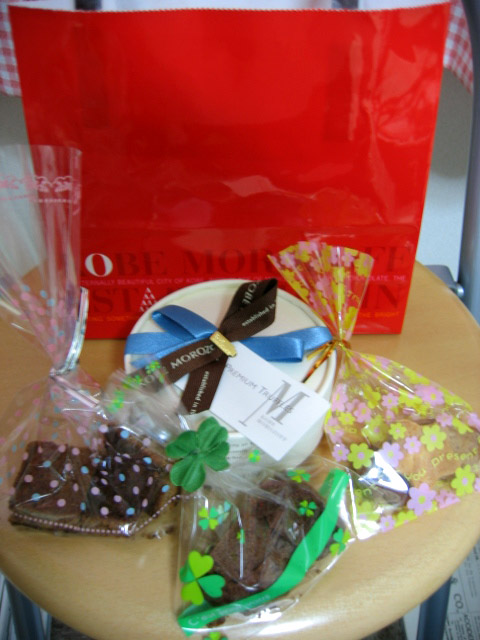 “Jefu, stop!” commanded an 8th grade girl. I obeyed out of surprise. I had exactly 35 seconds to get to my seat in the teacher’s room before the bell sounded the morning meeting. She took precious moments to dig out a small bag of sweets from a shopping bag.
How could I forget? It was Valentine’s Day. Another girl scouting out boys from the stairwell presented me with a bag of mini-brownie squares. This being Japan, the packages were sized proportionately—three bite-sized sweets in each. 12 seconds. I could have amassed a month’s worth of dessert samples had I hung around for their friends to also open their hearts to sensei.
Valentine’s Day in Japan is a spin-off of the Western tradition. Cards aren’t exchanged, but it’s almost obligatory for schoolgirls and OLs (office ladies) to dispense sweets to their male counterparts, regardless of affection. That’s how I scored premium Kobe truffles from a math teacher, and a box of six chocolates from a private student.
Men sit back and let the loot roll in. Until March 14, that is. In a savvy ploy by confectioners (think of the Simpson’s episode where Hallmark devised a new summer card-giving holiday), on White Day men must return the flavor with white chocolates symbolizing pure feelings (or so I read in a book). A month is plenty of lead time to make good on IOUs. Luckily I’m not working then, so for me the flow is one-way. Delicious.
Or disgusting. That’s how one girl introduced her offering in bag festooned with four leaf clovers. Only in Japan…or Ireland.
In another moment of puppy dog love, on Friday I received two love letters. It was my last day at Omiyada School, which proved too much for two 8th grade girls to bear. To be sure, I think they were just appreciative to have received pink New York pencils during an overstock fire sale their final class.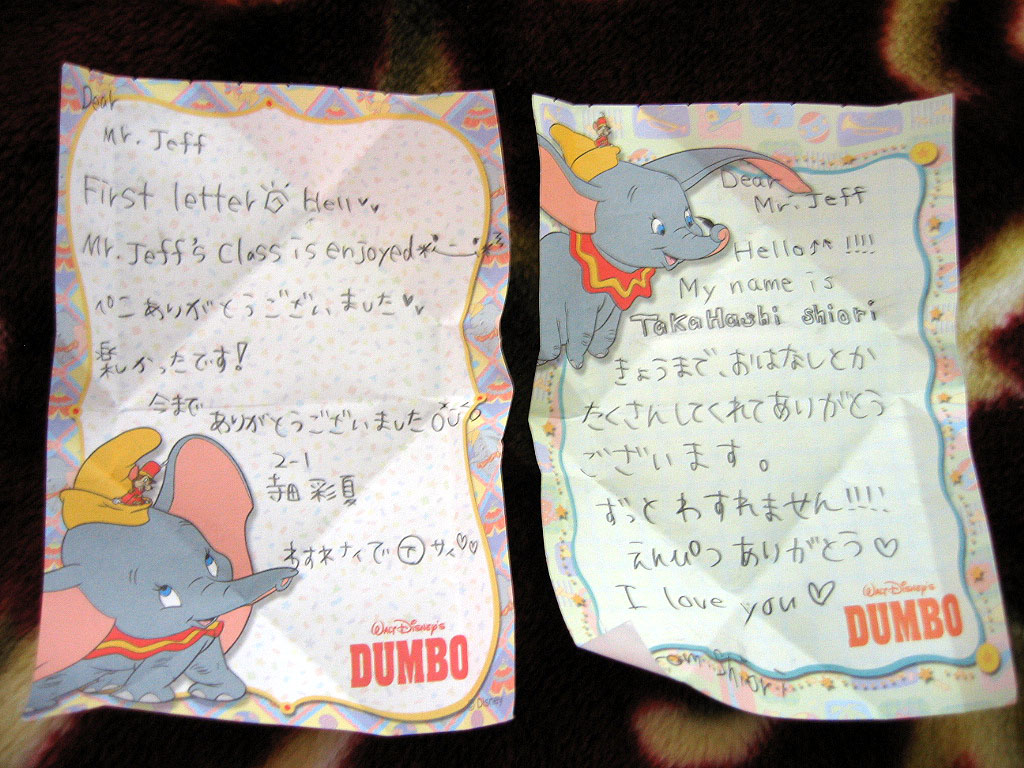 Shortly before I walked off school grounds forever, they tracked me down and, giggling, handed me slips of paper folded with origami precision. They even attempted to emote in English. I made sense of the Japanese by slowly sounding out the hiragana, which drew curious (jealous?) stares from semi-retired salarymen on the 15:06 train home.
Here’s a rough translation:
Dear Mr. Jeff, First letter. Hell. Mr. Jeff's class is enjoyed. Thank you very much for the pen. I had fun. From now, thank you very much. Please don’t forget me.
Hello. My name is Shiori. From today, I enjoyed talking with you a lot. Thank you very much. I will never forget you. Thanks for the pencil. I love you.
If you're reading, girls: kochira koso. Same to you.
Thursday, February 02, 2006
The Elective Class
Only one period stood between a typical weekend of doing nothing and the end of teaching at Omiyada for the week. It was an elective class with 9th graders who had signed up to improve their English, at least in theory. I had taught them once before, but couldn’t remember. Thus, Mr. Nishono forewarned me of their low ability, but added that they didn’t “misbehave as badly” as other classes. He was right about their language skills.
I chuckled at “seX’mas,” a now unseasonable joke still on the board. The classroom was seldom used. As a result, I broke out in goosebumps. A space heater in the front of the room offered little relief. A boy with a shaved head shaped like a phallus (no, really), picked up chalk and drew a naked woman spread eagle with hardened nipples. Yes, it was that cold. The picture was manga (comic book) quality, but I censored it before Mr. Nishono got around to focusing his glasses on something other than the floor.
While the fifteen students may have elected to take an extra class of English, they clearly had other plans for the period. Mr. Nishono labored to pass out a sheet of irregular verbs to be conjugated in the past tense. It was a hopeless challenge. Monkey Boy and a friend with the intelligence of a banana peel sat in the back, shredding the handout with a pizza slicer-like like tool I recognized from the ceramics studio.
I encouraged students to trade their frivolous pursuits for verb conjugations. I looked to Mr. Nishono for support, but discovered that he was no longer with us. I asked phallus-head boy if he knew of his whereabouts. “Masturbation,” he said calmly without looking up from sketching, fittingly enough, various sized phalluses (yes, really). Doubtful, I thought, unless he stocks Viagra in chalk case.
“Do you eat girl? Do you like sex?” phallus-head then chirped with a mischievous grin. Before turning my back, I slipped him a piece of chalk as creative license to amuse me on a larger canvas.
Mr. Nishono returned 10 minutes later. He sat down to chat with two girls in the back. He soon closed his eyes and stopped moving. If he wasn’t going to take class seriously, then neither was I.
So, if you can’t teach ’em, join ’em. After writing “1. bought 2. visited 3. carried…” on the board, I joined two boys huddled by the heater and checked on their drawings. One drew two circles. “Meatballs,” I said. He then sketched a “sausage” in between them. To finish off the meal, he added curly wisps, and pronounced, “spaghetti.” We both laughed hard. Thankfully, this was after lunch, the special having been – you guessed it – with meat sauce, cucumber, egg and spinach toppings.
Tuesday, January 31, 2006
Chance Encounter
The odds were 5 in 32 million. Maybe I should buy Mini Lotto takarakuji tickets more often. Sadly, I won’t be calling into work “rich” anytime soon. This wasn’t about scratch-off luck.
Middle school students look alike in their uniformed uniformity, but something made me look twice at one girl walking towards me on the sidewalk. But my iPod was acting up again, so I glanced down to fiddle with it.
“Jefu?” Did someone just call my name? I looked up in panic. How does she know my name? She must be one of my students, but quick – from which school? She’s with four others. Hello, Omiyada 8th graders! Thank goodness for school-issued book bags. However, we were in the sumo district, not near their school where I had just finished teaching for the day. They fumbled for English, and I for Japanese. We could only keep shaking our heads and uttering “ehhh” as the Japanese do when words fail.
“What are you doing here?” they pieced together.
“I live here! A 25-minute walk,” I said, pointing south. On my way home from Omiyada, I stopped to research offbeat museums in this area for an upcoming magazine feature.
“Now, what are you doing here, and why the hell weren’t you in school today?” Turns out they, too, were on the museum circuit, but for a school project. The entire 8th grade was turned loose on the town, unchaperoned and armed with notebooks and disposable cameras to document their findings. Had it been Kanokita School, Tokyo would have been on orange alert.
This group had just come from the one-room fireworks museum, which was exactly where I was heading. “It closes at 4:00, doesn’t it?” They looked rather astonished, so I pulled out an itinerary with museums names printed in kanji to illustrate my own assignment. I considered buying them a round of burgers at Macku if they did some of my legwork. I pointed them in the direction of the tabi museum where I had spent a whole 30 seconds. Tabi are split-toe socks worn with kimonos. We laughed at the absurdity of such a place, bested only by the Shinkansen (bullet train) brake museum and the safe and key museum nearby.
Friday, January 06, 2006
Private Dancers
It was a “one-derful” day. In the teachers’ room, my chin rested on a notepad where I was jotting down thoughts. I was scheduled to teach just one class, and that was three hours ago during first period. I wait until after the subsidized school lunch to ask to be excused for the day.
Two girls entered the room with a soft “shitsuri shimasu,” which is customarily said upon a entering a room to apologize for the disturbance created. Whatever teacher they were looking for wasn’t here – I was alone. When they didn’t leave, I looked back up – they were looking for me!
I asked them where we were going. A lanky girl said “the sports dome.” Intrigued, I followed. We headed to a room above the gymnasium where once I did taiko drumming with the “handicapped students.”
Girls were milling around in their gym clothes awaiting Haruko’s instructions. Male students affectionately call this gym teacher “short, fat woman” in English. She seems to embrace the appropriate description.  Haruko’s class was practicing Japanese folk dances to be exhibited at their upcoming school festival. Each student grasped a yellow and white sensu (Japanese fan) and shakujo (stick rattles with metal bells). The girls, some beaming behind their fan-shielded giggles at performing for a visitor, took their positions.
Haruko popped in a crackling cassette. The girls swayed to the traditional rhythms. The fisherman’s dance looked like a reenactment of an epic tug-o-war. And if you’ve seen the size of the torpedoes auctioned in Tskuji fish market, you’d understand why.
The girls watched my reaction as they twirled. They were no longer dancing for Haruko; they were dancing for me. The choreography, music and intimate setting felt like the real Japan. Sure, Japanese festivals are impressive staged events, but this uncostumed, raw demo in a middle school gymnasium felt more visceral.
Despite a few dropped fans and miscalculated tugs that sent some toppling over, the girls executed well. One dance was a school tradition performed since 1983.
“Shall we dance,” a girl asked me near the end of class, quoting the recent movie based on a Japanese film. Others called for me to join, but I sat contently watching the young experts.
Monday, December 19, 2005
A Complaint
“Hey Jeff, do you have a sec?” It was Todd, the grey-haired jovial Australian head of my teaching placement agency. We were walking from our monthly teachers’ meeting to the company Christmas party at a nearby izakaya.
Meetings are a chance to compare notes, which for me means verifying that my students are indeed the worst in the ward. “Wow, none of my schools are like that,” Jon said upon hearing selected stories. “The craziest questions I get are marriage proposals.”
“Great, let’s walk ahead,” Todd suggested. Singled out, I tensed up. This wasn’t about a Christmas bonus or teacher of the month honors (both nonexistent at the agency). Thoughts raced as to what I had done wrong at school.
Masturbation sprung to mind. As the kids test out their adolescent vocabularies, I’ve worried that Japanese teachers have detected the dirty words and blatant hand gestures students greet me with, much to my embarrassment yet subtle encouragement.
For example, while checking on progress of blackboard copying, I moseyed over to one bad boy in the back of the room. “How big?” he said, pointing to my groin. Two erasers sat on his desk. I pointed to the jumbo one and said “American.” Then I pointed to the mini eraser and said “Japanese” before turning my back on the laughter and pacing down the aisle.
A class at Nubata the week after created more of a stir. It featured school pervert Ryoki, who has previously caught me off guard. Once morning bows were exchanged, the Japanese teacher, only two years my elder, asked me to recap Thanksgiving activities in New York.
I also had taught at this school the week of my departure. Once I passed pervert & co. in the stairwell.
“When are you going to New York?” Ryoki asked.
“Friday.”
“I want a gift.”
“Okay, what?”
Pause. “Strawberry condom.”
His friends then clamored for lemon, grape, orange and Christmas (?) flavors.
Two sentences into my Thanksgiving shpiel, we made eye contact. Ryoki – sitting in the second row – flashed me the hand gesture for you know what. A snot ball flew out of my nose. Basting the turkey is one thing, but masturbation? I wheeled around to hide my laughter and use my sleeve as a tissue.
I regained direction and continued with less than perfect pronunciation while biting my tongue. “What did you eat on Thanksglivling Day?” the teacher asked in his normally mangled English.
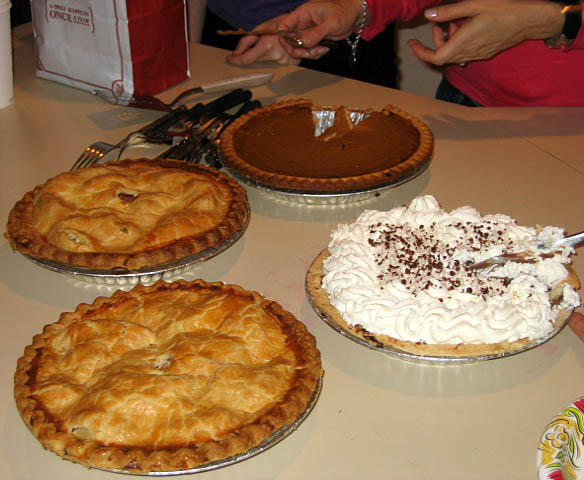 “Pussy, pussy,” Ryoki whispered in Japanese. The teacher must have heard it, but didn’t react. Meanwhile, I was struggling to keep a straight face while listing the four kinds of pies I ate. “Oppai,” Ryoki moaned, deliberately confusing dessert with the Japanese word for breast.
The teacher quizzed comprehension about the pies’ names, and then asked if there were any questions. Ryoki’s hand shot up. He wanted to know what I had done in my house at night. In case I couldn’t take the hint, he made the gesture. I paused, falsely smiled, and said that I watched TV, which played right into his trap. “Oh, what kind of TV do you watch?” he snickered. The news. And no, not the Naked News. After class this brash boy approached me with one last question: where was his souvenir?
I digress.
“Jeff,” Todd began, “We’ve gotten an e-mail from a school saying that you’ve fallen asleep during class. Twice.” I shot him an are-you-kidding-me? look. “I know,” he continued, “I’ve been there in those over-heated rooms standing by waiting to be played as the human tape recorder.” Kenichi, the company co-head, caught up with us and flashed a nervous grin of stained black teeth. “Honestly, Todd, I don’t know what they’re talking about.” Sleeping in class conjured up images of student heads buried face down in their arms on the desk. “I mean, I might have zoned out for 30 seconds, but I never fell asleep in class,” I added, leaving out the part about propping myself up against the back wall while fighting the weight of my eyelids. Damn gravity.
Todd’s tone was friendly; he was just checking up. Not that I’m worried if it happened. I’m confident I’ve been a good sensei and friend to the students in spite of the part-time salary and rent-an-English-teacher treatment I get from my Japanese counterparts.
On the other hand, who bothered reporting such a thing? Students get away with it all the time here. I narrowed suspicion down to two schools, and chose Ms. Shomatsu at Omiyada as the tattletale. Beneath superficial kindness lurks a history of her sweating the small stuff.
At the beginning of one such class, students nervously got her attention. This was unusual because they rarely break the mold and initiate dialogue with the teacher. But today they had something to show her. Something urgent. She walked over to where they were pointing at the floor and scowled in Japanese. My first thought was a mouse.
No, she returned to the front of the room holding a mini straw at the end of which was a hardened piece of chewing gum covered in dust. Back in the teachers’ room, she showed off the catch of the day as if it were a drug syringe. Somewhere, a report was written. Perhaps another e-mail.
I’m not here to make pals with the teachers. So long as the students are on my side, I’m happy. And if I did nod off, it goes to show just how boring teachers’ lessons really are.
Monday, December 12, 2005
Mr. Nishono
Familiar shuffling approached my desk in Omiyada School’s teachers' room. I didn’t look up from my book. I knew what I’d see. Mussed salt-and-pepper hair crowning a man with a wrinkled work shirt two sizes too big for his wiry frame. Stringy hair failing to conceal the bald spot creeping forward. Bifocals sliding off the end of a freckled nose. If after lunch, forgotten crumbs clinging to the corners of his mouth. It was time for class with Mr. Nishono.
A fellow English teacher didn’t even know his given name when introducing me on my first day. The students don’t either; they call him hage (bald) behind his back. The hair that remains reminds me of a frayed steel wool pad.
I’m handed a “teaching plan.” It reads, “This class is full of underachievers.” However, Mr. Nishono adds that they are not all “in bad condition” like the class he once abruptly cancelled my services because of their misbehavior the day before. He always does his best to shield me: “First, you wait here while I prepare the lesson.” I read for 10 more minutes while he attempts to subdue the eighth graders.
No such luck. Once permitted to enter the room, I’m instructed to make “daily conversation to each student.” I ask them basic questions like the date, weather or favorite color. These warm-up exercises prove too complex for some.
First up is a boy with a grating voice whom I try to avoid. When we pass in the corridor, he yelps monkey noises loud enough to disturb teachers down the hall. In response to “Hello, how are you?” he recited a list of fruit juices. His writing is no better. I pointed out that his a’s look like u’s. “Yes very much fine thank you!” he boomed.
The rest of Mr. Nishono’s lesson plan leaves less margin for student creativity:
“You Read (P 32) when I ask you to (students listen).
You Read new words when I ask you to (students repeat).
You Read (P. 32) when I ask you to (students listen).
You Read (P32) – students repeat (Phrase by Phrase).
I teach.
(Ending reading)
You read (P 32)”.
I leave class knowing P 32 by heart.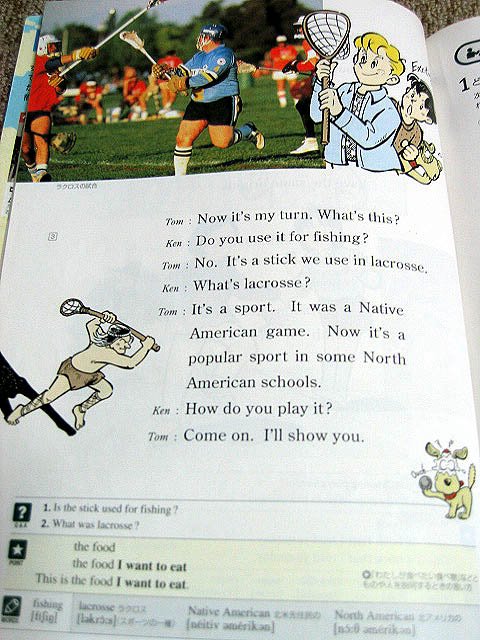 Another week’s teaching plan is also prefaced with a warning: “They are very mischievous class.” I couldn’t wait. The textbook pictured an overweight, unmistakably American lacrosse high school player. Not being a lacrosse sportsman myself, Mr. Nishono decided that I should “please relax” on the sidelines.
I observed the girls paying some attention, but the boys didn’t even have their books open, except for one – a Japanese novel. Behind him a kid fiddled with rounded magnets to form a snake that slithered across his desk with polar attraction.
Others were fashioning fighting sticks out of rolled paper featuring a girl with an anti-drug message. They passed around tape and scissors, with one crafting a ball out of tape. I sat at an empty desk in the back jotting everything down.
Then suddenly sensei stepped out for a few minutes. I assumed control, and plucked a sword off a student’s desk. I turned from the protesting boy to face the student patching together the tape ball. “Batter up!” I cried, managing several swings before Mr. Nishono returned with dittos he had forgotten.
Recently, absent-minded Nishono embraced the holiday cheer with a class sing-a-long to “Wish You A Merry Christmas.” Heavily accented British children caroled on CD. The words completely stumped the Japanese children, whose vocabularies didn’t include “good tidings to you and your kin.” Figgy pudding stumped me. Mr. Nishono blindly hummed along, and pushed repeat to extend everyone’s confusion.
By the fourth go-around, a girl cranked up the volume and positioned her ears next to the stereo. I gasped as one boy jabbed a blunt box cutter blade into another’s uniform. On autopilot, Mr. Nishono just kept humming, his bifocals glued to a page of lyrics he couldn’t articulate. I moved away from the blasting Christmas music to spy on a boy drawing. It was a cartoon caricature of me.
Friday, September 23, 2005
First Week at Omiyada School
 Summer vacation ended early this year thanks to the board of education’s splurging on ceiling air-conditioning units for every classroom in the ward. As a concession for such cool technology, the board tacked on an extra 10 days to the school calendar, now possible in late summer with climate control. The ward’s low testing scores didn’t help either. That additional classroom time automatically increases aptitude is Japanese conventional wisdom.
Although cooling systems are becoming standard across Tokyo, I perspire just thinking about teaching inside a technological holdover. August humidity attacks my flesh as soon as I step outside. Sweat pools in the small of my back by the time I reach the subway eight minutes later.
Jack hammering and paint fumes greeted me at Omiyada’s entrance. Tarps blanketed floors; scaffolding obscured windows. Cranes sat parked in the clay-top schoolyard ringed by an industrial fence. Instead of students, construction workers walked the halls. Were they still on vacation? Did I need to remove my outdoor shoes when a patina of plaster dust coated the indoor floor? I climbed a flight of stairs. Concrete around a windowless frame had been chiseled away, giving the stairwell a Chechnya schoolhouse feel.
I met with three English teachers to exchange lesson plan information. After the meeting, I inquired about the construction to Ms. Shomatsu, perhaps the most kind-hearted English teacher I work with. Her motherly disposition is perfect for instructing the young ones. These weren’t routine renovations. The school dates from 1975, before earthquake codes were feasible. In addition to a/c, the board is upgrading the buildings themselves, two or three every year. Hopefully all 24 junior highs will be completed in time for The Big One.
Despite it being almost halfway through the school year, this marked my first visit to Omiyada, the last of four junior high schools I rotate among on a weekly basis. For week one, the lesson plan would be back to basics: self-introduction. They broke me in easily on Monday, teaching only a 9th grade advanced English class. A typical course load is four or five per day. The same schedule was in effect for Tuesday. By Wednesday classes doubled, increasing to three on Thursday. I was sent home after lunch every day. I could get used to teaching here.
In fact, I almost enjoyed the hour-long commute, which is varied and scenic as far as Tokyo is concerned. I transfer trains in the heart of the sumo district, where I spot wrestlers riding bicycles groaning under their tonnage. Later I walk from one ward into another, and then along a river to reach students eager for their monthly dose of foreign interaction.
Unlike the three other schools, the oldest students (9th graders) at Omiyada warmed right up to me. My fail-safe recipe for popularity includes Puma sneakers, a cool belt, and love of baseball, in particular the Yakult Swallows. I emphasize devotion during self-introductions. Although rival Yomiuri Giants is Japan’s equivalent to the Yankees, Swallows fans remain enthusiastically loyal no matter how outnumbered.
I high-five any fellow fans in the classroom, easily distinguishable with team pencil cases, key chains, or laminated folders. After class, I flip through a pack of six Swallows baseball cards. The next day, "teammates" bequeathed additional cards. Touched by their thoughtfulness, I offered American pencils in return. The day after that, I eagerly accepted an invitation to attend a game with them.
In addition introducing myself with sports, I chalked up a scaled outline of the continental U.S. Brave students circled their best guess of New York’s location on the board. This exercise turned into pin the tail on the donkey. Florida, Texas, Michigan, and Maine were the most selected, perhaps because they “stick out” just like how New York sounded familiar. An alarming number landed on South Carolina and New Mexico while others honed in on Idaho and the Pacific Northwest. Bold strategies, such as circling wide swaths of the Midwest, also failed. Only one student – at any of the four schools – got it right on the first, second, or third try. Even for Omiyada’s low track English class, I felt the first priority was a geography lesson, a subject I majored in.
Ignorance of New York’s world-famous landmarks was more appalling. One girl thought NY and DC were the same city. However, she wasn’t typical, the teacher explained. “This student is a strange girl, and she has strange pets,” which included six turtles, two snakes, and an iguana. One boy asked if I liked to gamble because New York was known for it. That would be New York-New York, Las Vegas, I replied. A timid girl thought the United Nations was headquartered in Okinawa. And wasn’t the World Trade Center in Japan? Still standing are Tokyo’s Akasaka Twin Towers and the 37-story WTC in Hanamatsucho. I thought I had heard it all until one brain-dead boy mistook the Statue of Liberty as a gift from North Korea. My eyes spun in their sockets.
For lunch I dined like an ALT (Assistant Language Teacher) superstar. The largest portion was set-aside for the hungry American, as were any leftovers, like extra shrimp and vegetable tempura to top my udon. I waited with my tray in the teacher’s room until Ms. Shomatsu sent the “two prettiest girls” to escort me to their classroom.
Shades of Kanokita J.H.S.’ notorious disobedience appeared during recess at Omiyada. Like any proactive teacher, I investigate the source of odd noises. This metallic banging wasn’t coming from the construction outside. In an 8th grade classroom I stumbled upon unsupervised cacophony. A rusty freestanding cabinet housing white uniforms students use to serve lunch was transformed into a cell. A gang of boys barricaded one tormented classmate inside, using a metal lunch cart to block egress. Frenzied pounding from inside was answered by ramming the cart into the cabinet doors. The game continued until a jailbreak – when the jail broke. One of the doors unhinged and clattered to the floor. The boy repelled the cart and set himself free, collapsing onto the floor in exhaustion.
After lunch the next day, I caught students lobbing insects and fruit from the school garden into open second story windows. The cicadas flew away before landing inside, but a Japanese nashi, or pear, hit the target.
From what I could understand from the half dozen teachers and students on the scene, this green pear was not ripe and was not to be eaten – not now and maybe not ever. It changed handlers like a hot potato. Nobody knew what to do with it or how to explain it – in any language.
It had the hardness of a rock, and its now breached, dry interior smelled like pumpkin flesh. An electronic dictionary translated it as a “quince”, which I only knew as Spanish for “fifteen.” The second definition read “superphosphate,” so perhaps something got lost in translation, which wouldn’t be the first, second, or fifteenth time that’s happened.
Up Next: evening at the ballpark with two Omiyada Yakult fans.