Teaching intractable junior high kids without basic English skills, I’ve often wondered what it would be like to take on elementary school ones rawer in behavior and ability. In February I found out.
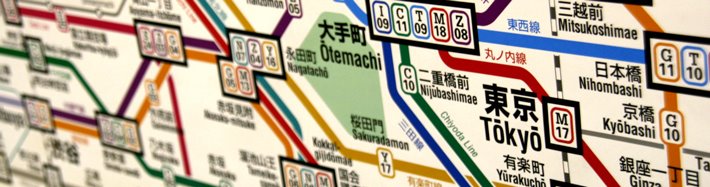
Subbing in the suburb of Funabashi required a 5:40 a.m. wake up call. That was the easy part. To earn some extra income east of Tokyo, I had to transfer from the safety of a train with English signage to the unpredictability of a Japanese-only bus.
Figuring out the right stop was like solving a math problem with only two known variables: travel time from the station depot and the cost of the journey, which every now and then increased with distance. The kanji of stop names flashed up on the screen like scrambled squiggles, and I couldn’t catch the driver’s announcements. A wrong guess would leave me, the functional illiterate, late for school and freezing alongside unknown empty fields.
Students of this elementary school (where I arrived on time) had one 20-minute English lesson per week. That’s in addition to their Spanish class. Two things struck me about the English classroom: no chairs and no board. Before I could reformulate my lesson plan, by twos in marched the first class – seven-year-olds with mucus-streaked cheeks and curious eyes fixed on the giant white alien. I stared at them, and they stared at me.
Nametags dangled from their necks, and one began whimpering about something. Others intently picked their noses or smiled with mouths full of misaligned teeth. I was not accustomed to students out of uniform. Their hodgepodge sweatshirts and overalls included mangled phrases like “Life Is Like A Music” and “Somewhere I Have Never Been. Sometimes I Am.” Yet their clothing was as colorful as their eyes were warm. They were clearly surprised to see a new teacher half the age and weight of their regular Tuesday instructor.
The great thing about elementary school is that it’s game time all the time. Their cooperation and enthusiasm put my junior high misfits to shame. We first reviewed vegetables by splitting into small groups and playing memory with flash cards. No blackboard was necessary because they couldn’t read English let alone much kanji (just like their subbing sensei). So they memorized English words based on picture associations. Spinach, sweet potato, and spring onion, their vocabulary made me hungry for lunch until I thought I heard them recite “toilet paper” when holding up a picture of a bell pepper.
“Stormy Night” played over the PA during lunch. When nobody in the teacher’s room noticed that the song got stuck, I politely pointed to the ceiling speaker and then to my ear while bowing my head with a smile.
With winter approaching again, I think back to that cold day in a new place. Inside, the miso soup for lunch and extra servings of smiles warmed me up. Just a one-day job, by the end it was still hard to say sayonara. The little buggers tagged along in the corridor as I walked to the stairs leading down to the entrance.
Changing into my outdoor shoes, I heard footsteps and looked up. An Adidas tracksuit bounded downstairs to send me off with a hug. I gave the boy a final sayonara, and made my way to the bus stop.
Outside, the sidewalk abutted the playground where recess was in full swing. Two girls kicked up dirt while balancing giant orange cones on their heads. Then I spotted the tracksuit jumping off the jungle gym. The next thing I knew, the boy slid through the gate. He attached himself to my leg and wouldn’t let go. I forget what I said to him in Japanese, but I’ll always remember that firm grip of appreciation.
Thursday, November 02, 2006
Pinch Hitting

Tuesday, June 06, 2006
Editing History
Aside from Prime Minister Koizumi’s yearly pilgrimage to Yasukuni Shrine, there's nothing that embitters Japan’s neighbors more than its Ministry of Education’s approval of textbooks. Every few years when an update is due, a renewed uproar ensues accusing Japan of whitewashing its role in history. Last year was one of those years.
Although I teach in public schools, I’m not proficient in Japanese, and never thought I’d witness the controversy first-hand. That is, until I was modeling dialogue for a lesson about “Language – Life of a People.” It was the last lesson in the 9th grade English textbook, and discussed how after 1870 the Welsh were forced to use English in school, and were punished if they didn’t. The next example hit closer to home by bringing up Japan’s restricting the use of Korean during its occupation of the peninsula.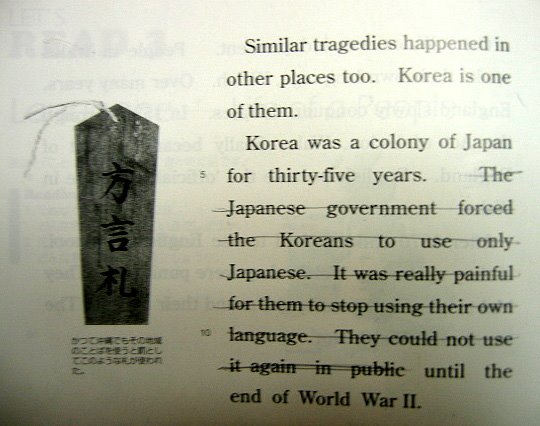 The teacher stopped me in mid sentence. Was I speaking English wrong? It turned out that the government-approved textbook (used in all of Tokyo’s public English classrooms) had been gussied up (I mean, updated) just after publication. I was reading from the old version. Contrast it with new one below:
“…Korea was a colony of Japan for thirty-five years. Korean school children had to learn Japanese as the ‘national language.’ Later, Korean language classes become optional. It was really painful for them. This system lasted until the end of World War II.”
You be the judge.
Thursday, February 09, 2006
A Case of Pen English
 A pen or pencil case is a Japanese student’s best friend (after a cell phone, of course). All have one as if it’s some kind of decree from the board of education. I even used it as a word in hangman (click on photo). Puma and Mizuho corner a quarter of the market. Many bags are adorned with dangling trinkets or charms, which are often Disney or Japanese anime.
After investigating the desktops of nearly 1,000 students, below are the top 15 incongruous English phrases printed on students’ pen cases:
15. Sweet Cool Apple Jam
14. Baby Young Deer Bean Bags
13. I Love My Life
12. Supper Happy Girl
11. Happy Love Boy
10. Lovers Girl
9. Happy Memorial Sky
8. Dangerous Zone
7. My Enthusiastic Heart Feeling Season
6. A Good Day Is Expected to Begin! A Wonderful Presentiment
5. How About Exploring Some Unknown Spots Or Passing Through Tempting Byways
4. Milky Star
3. Milky Berry – They Hear Only Pleasant Sounds
2. One Day They Attacked, Many Bees. Romp Fighted Bravely Against Bees.
1. Please Eat Me
Wednesday, December 21, 2005
A Very Jewish Christmas
At Kanokita, where the kids have no appetite for learning, Mr. Mochizuki passed the buck to me to answer more interviewing-the-foreigner questions to eat up class time. “How to celebrate Christmas in your home country” was first on a handwritten ditto entitled: “Let’s Enjoy!!! Mr. Jef retraces himself.”
Mr. Jef introduced the subject with skilled drawings in colored chalk. Students recognized the ornamented Christmas tree and gift-wrapped presents beneath it. So far, so good. But confusion ensued when they identified sleigh-riding Santa as a snowman. To clarify, I sketched a chimney and fireplace, and added directional arrows showing Santa’s path from the sleigh down the chimney to deliver presents under the tree. But further explanation was needed. The fireplace mantle was not adorned with a plate of rice crackers or pizza. The glass was not filled with coffee, juice, champagne, shochu or sake.
One dark Tuesday, I regurgitated this 50-minute lesson four times in a row. My holiday spirit soured by the fourth class. I lit the fireplace logs and redrew a cross-section of the chimney with a bulge and dangling legs. Poor Santa. While Mr. Mochizuki translated, I fanned the flames, which shot up and singed Saint Nick and ignited the “Christmas socks” hanging from the mantle. Soon, tree tinsel was ablaze. Some boys were giggling. I wasn’t taking any prisoners this holiday season.
I drew a reindeer. The girls whimpered upon learning that I had eaten one (yes, a kebab in Finland). Shock turned to horror as I drove home the point by sketching Rudolph’s forehead with a bite removed. I sliced open the body to add entrails spilling out in hastily rendered chalk. The bell shook me from my trance. The boys were still giggling. The girls hung their heads. I hung mine. What had I turned into?
That the day has religious roots was news to some. A few were surprised to learn that it marks Christ’s birthday, not Santa’s. One asked, "how old?" While Christmas is secularly celebrated in Japan, I sensed an opportunity to convert young minds to the joys of a new holiday. Not just one day of presents – but eight! 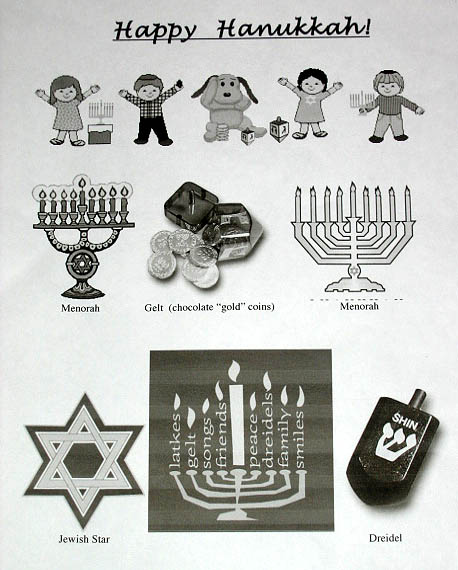 “Happy Chanukah!” I wrote on the board, emphasizing the guttural “ch.” Giggling resumed. “Hadaka?” one snickered. My religion’s holiday unfortunately sounds like the Japanese word for “naked.” I handed out a printout with images of menorahs, gelt and dreidels.
“Chocolate money [gelt] is delicious!” I cried, rubbing my tummy, hoping to jumpstart the class. Okay, Plan B: break out the games. “Do you know dreidel?” Someone echoed “jello,” another “judo.” For the 7th graders, I simplified the lesson into a Christmas dreidel game, dispensing with the whole Jewish thing altogether. The capacity of 13 year-olds to absorb a foreign topic in a foreign language is quite limited.
I divided each class into five groups, and distributed a dreidel to each. Familiar with Japanese koma counterparts, they only needed about 30 seconds of practice. Advanced dreidelers spun them upside down or on their foreheads.
I quickly switched 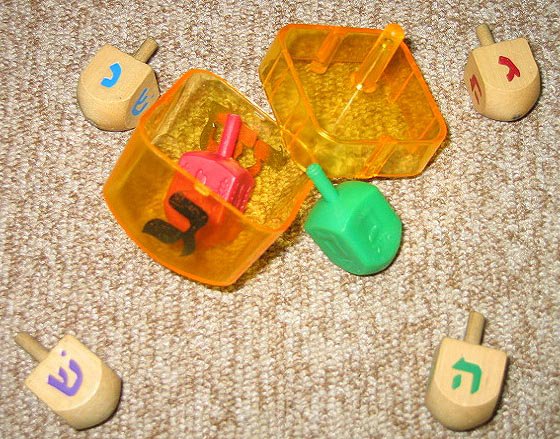 to the competition phase where one member of each group spun his or her dreidel on the floor. The last one standing earned a pencil. Everyone gathered around to watch; students instantly took a liking to the Jewish koma game.
The release from textbooks, excitement of competition and promise of prizes turned class into a festive atmosphere. After the games, we merrily sang the dreidel song until time expired. Hook, line and sinker.
Thursday, November 10, 2005
Kids Say the Darn’dest Things
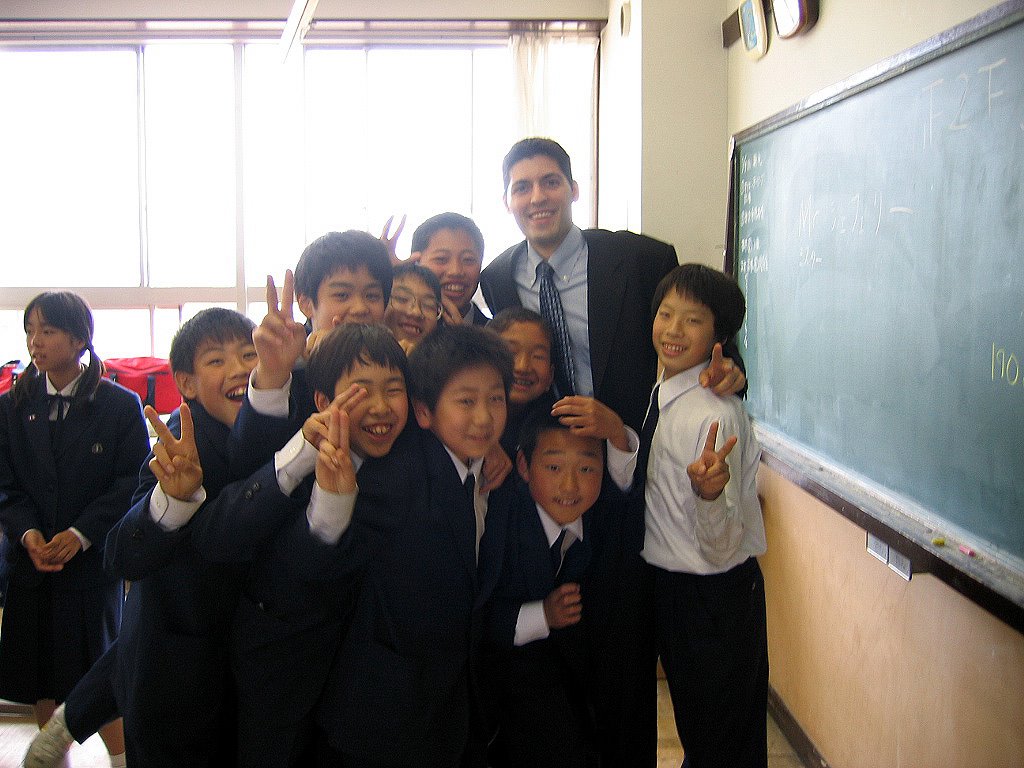 After about 50 self-introductions, I’ve finally finished introducing myself to all classes at the four junior high schools. It only took six months. I’ve compiled the top 20 questions they asked following my self-introduction. Their provocative queries and my honest responses are below:
20. What is your best time in the 100-meter dash?
Slow.
19. What’s your salary?
Peanuts.
18. Who is the prettiest teacher at this school?
Next question, please. [What I wanted to say: They’re all over the hill, so the prize goes to the principal’s 25-year-old acne-cheeked secretary who dresses in skimpy bedclothes.]
17. Do you own a gun?
No, but in Thailand I shot a crossbow at a jackfruit.
16. Is it true that it is prohibited to wear a hood in front of black people?
Unless it’s a white hood, you’ve been watching too much terebi.
15. Is English of black people different?
Hip-hop music video lyrics may not match vocabulary contained within your Let’s Talk textbook.
14. Have you met Arnold Schwarzenegger?
No, but does Bill Clinton count?
13. How did you get so tall?
By studying so hard, my brain grew and so did the rest of my body.
12. What are the positives and negatives of having a high nose?
Probably the same as having slanty eyes.
11. Have you ever seen a UFO?
No UFOs, but betcha didn’t know your teacher was an illegal alien.
10. Do you like our class more than your mother?
No, my mom makes me delicious smoothies.
9. Where was your first kiss?
[Ruled taboo by Japanese teacher.]
8. What kind of woman do you like?
[Scanning brain for PG-13 adjectives]…I like a smart woman.
7. At what temperature do you have your bath?
I take showers, but thanks.
6. Do you like whisky?
No.
5. Chicken, beef, or pork?
Pork, but I try to keep kosher.
4. Can you eat five cakes in one day?
You know, not all Americans are pigs.
3. What is your blood type?
Unsure. [Blood type here indicates compatibility or personality, like a zodiac sign].
2. I want to go to New York. What is your telephone number?
In New York or Tokyo? 080-30**-**** [cut off by Japanese teacher].
1. Will you marry me if I become the Prime Minister of Japan?
Mochiron! Of course!
Saturday, November 05, 2005
Halloween: Octopus, Medusa and Manslaughter
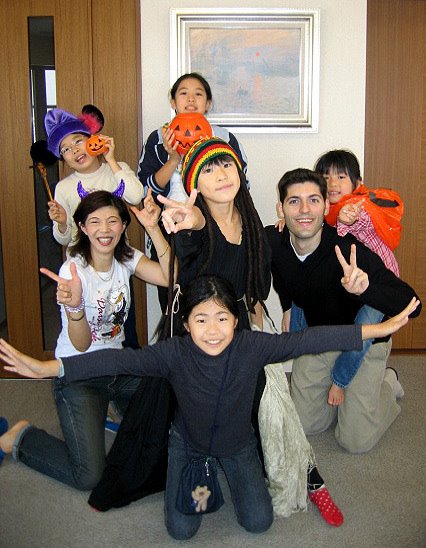 Holidays offer the chance to substitute the usual textbook drivel with creative lessons. In Japan, Halloween passes with little fanfare, except for at establishments catering to boozing foreigners. With some students only vaguely aware of the traditions, I kicked off classes by bringing the ghoulish cast of characters to life through colored chalk.
This created immediate cross-cultural confusion. After I sketched a ghost, a boy shouted out “octopus,”  so I added feet, only to draw more laughs – ghosts in Japan don't have them. I guess that’s also true of their American counterparts. Students guessed “bones” for my rendition of a skeleton. I then explained the superstition of black cats, which happens to be the name and logo of a parcel delivery service here.
A witch flying on a broomstick by moonlight was easily identified, so I went a step further to rile up the crowd. Straddling a broom borrowed from the class cleaning closet, I hopped across the room letting lose a high-pitched cackle. Even the sleeping kids (there’s always one or two) awoke to see the commotion. One boy in the front row started crying because he couldn’t stop laughing.
Trick-or-treating posed a challenge to explain. I acted it out by weaving a garbage pail through the aisles of desks, knocking on a few to ask for chocolate and candy. I got only blank stares in return, so the Japanese English teacher stepped in to translate.
At Kanokita School, Mr. Mochizuki shared a grisly Halloween story from 1992 when a 16-year-old Japanese exchange student in a white disco costume rang the wrong doorbell in search of a Halloween party in Baton Rouge. The startled proprietor yelled, “freeze,” but the boy mistook the command for “please,” and approached the man wielding a .44 Magnum, which he unloaded into the trespasser’s chest.
This tragedy reinforces the Japanese stereotype of trigger-happy Americans. Mr. Mochizuki was always dredging up the issue of guns in America, and capitalized on an incident that hit close to home to prove American barbarism. Arms folded, I held back disgruntlement and leaned against the door, watching young grins turn upside-down. We all gasped at the story’s exclamation point: 31-year-old Rodney Peairs was acquitted of manslaughter. I regained the floor and quickly shifted gears to build up anticipation for the unveiling of my Halloween costume, a Rastafarian wig friends purchased while vacationing in Jamaica. Scattered cheers answered my call for, “Do you want to see my costume?” so I excused myself and ducked into the hallway to throw on dreadlocks. I looked both ways to avoid embarrassment in front of Halloween-unaware teachers, or worse, district education officials on the lookout for signs of progress in the chaos at Kanokita.

 What the heck was sensei wearing on his head? The puzzling costume produced amusing guesses, most commonly that I was a girl. Other mistaken identities included, Mexico, Medusa, and tree roots. One girl was in favor of the new look: “it suits you,” she said. The girls wanted to touch my locks while the boys wanted to try on the wig, which played perfectly into my plan of getting photo-ops.
The dreads shed and scratched, but I kept the wig on for the duration of the class for amusement’s sake. I tied the hair into a bun to get it off my shoulders. Sometimes I pretended to eat it. Sticking a dreadlock inside each nostril was a crowd pleaser.
In religious holiday news, on October 13 I informed Mr. Mochizuki that I would not be eating lunch with the children that day. I would not be eating lunch at all because of Yom Kippur, the Jewish Day of Atonement.
No, I was not on a diet, did not have a stomachache, and was not about to undergo a medical procedure. Explanation of why I was fasting was more difficult to translate than what the students surmised.
Although not religious, I make an effort on the holiest day of the Jewish calendar. But neither Jews nor Judaism rang a bell with Mr. Mochizuki. Not even after looking up the translation in the dictionary. After I convinced him that Judaism was not a sect of Christianity, he asked, “Are you Islam?”
I groaned silently, and tried a different tactic. “Do you know the country of Israel?” No. “How about the Holocaust?” Curious stare. “You know, how Hitler killed 6 million people in Europe, and well, most of them were Jews?” “Ahh, okay,” the teacher said, as if recalling some trivial factoid from the recesses of his brain. “Please tell the children some information.” “About the Holocaust!?” Thankfully, classes last only 50 minutes.
Around the corner is Thanksgiving, which while my favorite holiday on the calendar of either country, is rather boring to explain to Japanese students. We consume truckloads of turkey and harvest vegetables in the company of our dysfunctional extended families. Scrawling a turkey on the blackboard invited creative interpretations of Thanksgiving’s iconic bird, but fortunately peacock, ostrich, and pigeon do not make the menu at my family’s dinner. Pigeon pie, anyone?
Tuesday, June 28, 2005
Atomic Guilt
Looming borough-wide tests helped sour last week at Nubata, previously my favorite school. Aside from a few games of hangman, classes were all listen-and-repeat drills. Now, what’s worse than playing human tape recorder for a morning? Sitting through an assembly in a steaming gymnasium for two hours that afternoon. This annual "Students' General Meeting" is a student-run forum to voice their concerns and requests. Of course, those voices commented only in Japanese, leaving me staring off into the choking humidity.
Students sat in rows according to grade and class section. Tables for various committee members flanked a central podium where student moderators called representatives to the floor mic. Each section rep waived a placard in hopes being selected next to speak.
The floor plan resembled a political caucus, but the proceedings had the solemnity of a tribunal, save for a few seconds of comic relief. One student sent the microphone crashing to the hardwood floor, and little Hideki from section 1-4 forgot his lines. An unruly special ed. student was dragged out of the gym by the seat of his pants.
Teachers lined the perimeter of the room slumped over in folding chairs, alternating between keeping an eye on students and closing their own. Japanese speeches anesthetized English-only eardrums. I drifted in and out of consciousness, fighting to stave off inevitable embarrassment. When would the foreigner conk out, everyone peeped over to look? Monitoring my condition was more interesting to some kids than reports from the cleaning and lunchtime broadcast committees. Eyelids sagged under their own weight. A few sympathizers winked, waived, or flashed peace signs. I smiled back before surrendering to sleep.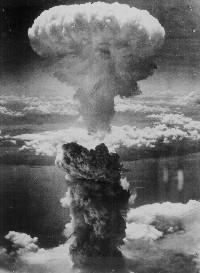 The next day featured further discomfort. Mr. Nakamura caught me off guard before class: “Do you know something about the atomic bomb?” What did this have to do with English class? Like how we dropped two on you, I resisted saying. “You dropped one on Hiroshima and one on Nagasaki.” “Yeeeeeah, gomen-ne,” I apologized from the corner of my mouth.
The lesson plan for ninth graders included textbook characters Kumi and Mukami’s discussing World War II. Mr. Nakamura sincerely asked me to share what I had learned in school about these events. I mentioned studies of the War in the Pacific, and felt obligated to point out the “you started it” Pearl Harbor defense. Japan also overran Guam, Saipan, and even Alaskan islands Kiska and Atka. The teacher pressed me for reasons on why the bomb was dropped. “Well, some theorists say that the bombs ultimately saved lives by ending the war sooner.” I felt like Rummy’s spinning modern day U.S. blunders. “But I still don’t think that justified America's use of the atomic bomb against innocent civilians,” I added. That prompted Mr. Nakamura to flash poster-size images of Fat Man and Little Boy bombs and a scene of Hiroshima carnage. Some stared at the images while others watched the squirming American.
“Okay, onto the lesson. Please, can you now read the dialogue on page 18?” I recited Kumi and Mukami’s lines ad nauseam. Students repeated until perfection.
"Terrible" was a new vocab word, but I wanted to introduce a stronger one. Civilized minds can only hope history won’t repeat itself, but a recent report estimated up to a 70% chance of an attack with a weapon of mass destruction within the next 10 years.
Tuesday, June 21, 2005
Flag Day
 Tuesday, June 14 was just another day at the office for you, but in this school district it was reason enough to break from lesson plan routine and educate unsuspecting Japanese students about Flag Day. I chalked up Betsy Ross’ first flag for the 13 Colonies, and explained how America has grown since 1776 by adding 37 more stars to form our current banner. And just like America’s flag, its states come in two colors. The blue states are good and the red states are bad. New York is a good state, okay class? Okayokay, they said.
What better way to celebrate Flag Day than to bestow on foreign students my mother lode of pencils and erasers (see previous post) bearing Old Glory? Winners of games had a choice between pencil and eraser. After all, class, democracy is about choice. One smart aleck, however, wanted a grander prize: a plane ticket to New York. Sasahara, not even five feet tall, was the last man standing after a heated game of Simon Says. He chose the eraser. Another student piped up, saying that they sell those in Japan. Maybe he had a point; they are made in Taiwan.
The free prize also came with gratuitous political commentary. “The eraser is so you can help erase America’s mistakes in the world,” I quipped. Ms. Kimura laughed and translated. Blank stares for fifteen seconds. “Like Iraq,” I added, thinking of how I wanted to air mail a carton to 1600 Pennsylvania Avenue. Some smiles of recognition. “Too deep,” Kotomi, an active girl in the front row, said. She just as well could have meant America’s blunders committed in the name of the war on terror, but it turns out she only was referring to the double meaning of my eraser comment.
Meanwhile, a delighted Sasahara was counting the stars on his prize. I braced myself to hear him shout nijuu-hachi. 48. He was only going to find 48 stars on the Taiwanese-made American flag. Much to my chagrin, I admitted that the eraser was incorrect. But this was a Taiwanese mistake. Nevertheless, so much for the finer points of today’s lesson on Flag Day stars.
Wednesday, May 04, 2005
Training Day
Moving to a non-English speaking country without friends, a job, or visa required to get said job requires courage. But I’m always up for a challenge. Besides, I had everything mapped out in advance: clear customs at Narita, waltz up to nearest newsstand and purchase The Japan Times, drop off bags at pre-arranged apartment, and sit in café with highlighter in hand.
This scenario was not uncommon during the 1980s when the Japanese economy was hotter than the blowtorch sushi chefs use to cook my delicious anago (Conger/saltwater eel). Although that bubble has since popped like orange ikura (salmon roe) against my teeth, I’m pleased to report that this leap of faith remains attainable.
As of May 9, I’ll be an assistant English teacher rotating among four public middle schools in a ward (borough) 40 minutes north of my apartment (see post: 2 for 2 on Interviews). True to my idealistic plan, this was the first (and only) classified I responded to in The Japan Times, highlighted while sipping a Starbucks frappuccino.
Desperate for an employer, any employer, to sponsor my work visa, I accepted. After all, this agency seemed just as desperate for a native English speaker, any speaker, to fill immediate openings. At the interview I noticed their closet of an office decked out in Texas paraphernalia and framed diplomas from Rockford College, Southern Utah University, University of Central Texas, and Central Texas College - apparently not to be confused with the competing university in the same Central region. Are these accredited institutions? Jesus looked at me from inside a fame on a bookshelf. I didn’t think much of it at the time, until I opened the teacher’s policy manual. The first tenet of the company’s mission:
“To glorify God by following the guiding principles set out in the Bible.”
I read it twice, and then a third time. My eyes bulged and nostrils flared, causing my upper lip to curl as if had I sniffed sour milk. Just what kind of company was this? Was I recruited to proselytize Japanese school children? For which testament of the Bible? Wasn’t David Koresh from Texas? One reason I left the U.S. was to separate myself with a large body of water from the religious right. Somehow I had walked into their overseas affiliate. But, I was desperate.
For two days I trained with five other recruited teachers. The cast of characters: Mike, a cool 30s-something Kiwi skateboarder; Reece, another Kiwi who makes South Auckland sound more dangerous than the South Bronx; John, 30, a friendly adopted Korean via Upper Saddle River, NJ; cool, calm, and collected Leon from Montreal; and whimpering Joanna, the lone female from Toronto via Poland.
The development trainer is Ricardo, a Texan in his late 20s, and a former “not gay” Naval sailor now married to a J-national (as are Mike and Jeff). Not me Jeff, but Jeff the company PR head who has taught in Japan for 15 years, and who uncorked some blunt assessments of Japanese women and their bad teeth. Jeff, a middle-aged smoker with a beer gut, is a straight shooter with crooked grammar.
Pluralizing “everyone” is a common pitfall, despite his “boning up” on grammar in order to teach high school students. Good thing “you don’t got to worry about” younger students asking tricky grammar questions, adding that “my daughter and me argue a lot over blue and green.” In Japan both colors are treated the same, so that a blue light means go. Maybe this teacher will receive a blue apple on their first day. I mean, his first day. D’oh!

